I have often used cut and paste puzzles in my classes either as collaborative work or partner work to reinforce math concepts. Usually the puzzles of 16 pieces their squares sometimes I use the 12-piece rectangle depending on my whim or mood. the first time I use a puzzle in the classroom students take a little bit longer to complete them, just as they do with any new idea or activity. I don’t think I’ve ever thought about using smaller puzzles to help them understand how the puzzles go together. I have also written about using puzzles before here on the blog and posted a link to one of my favorite puzzles that I’ve used in the classroom.Puzzling Math
Recently I was talking with some friends who are also Math teachers and I had given them some puzzles to use in class. They were telling me that the kids were totally confused about matching the problem to the answer and the 16 squares( which in the simple version require solving 24 problems) seemed overwhelming to them. Now these students are in high school my students are in middle school, so I think I assume that anything my middle school students could do that high school students should be able to do a little bit faster and better. Maybe not necessarily.
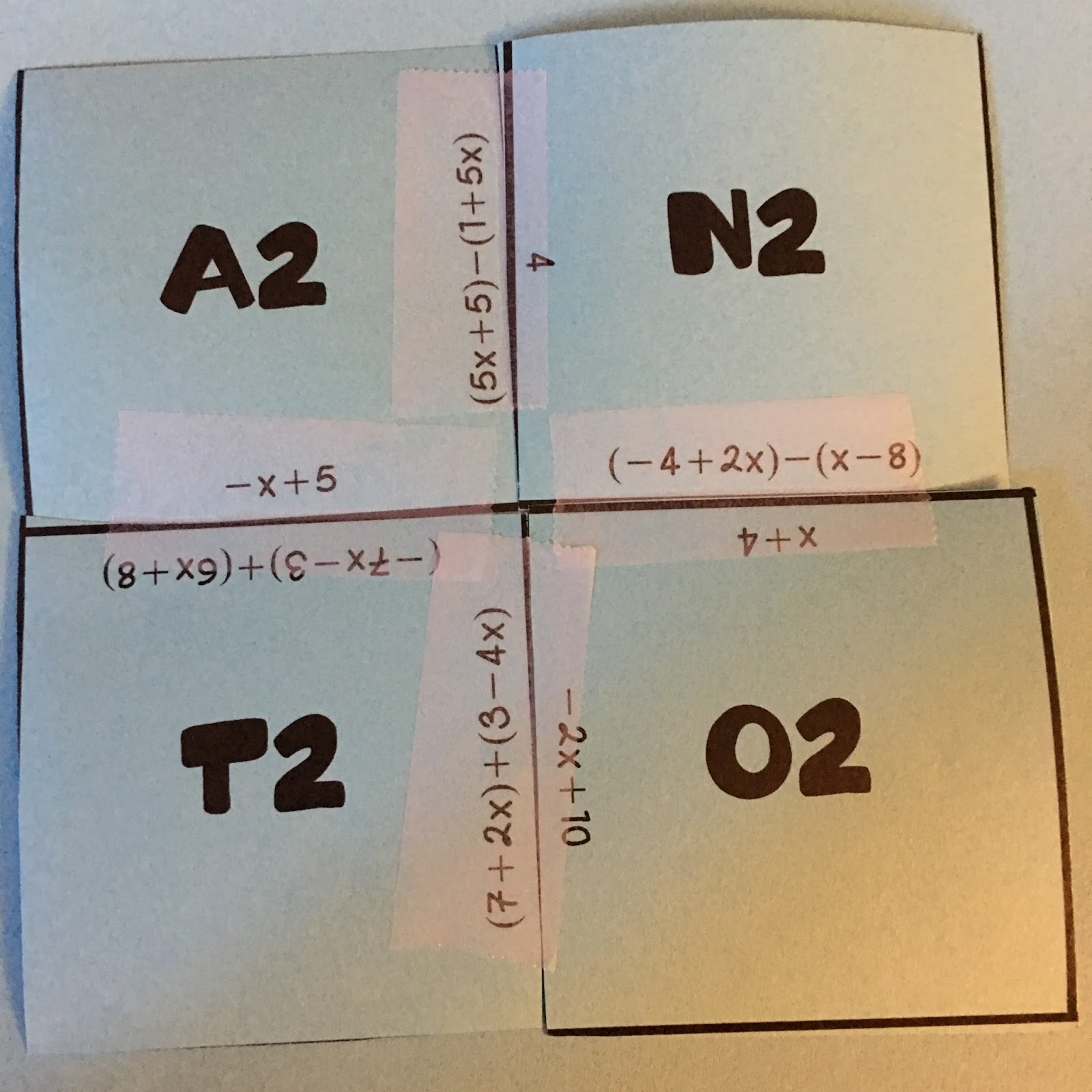
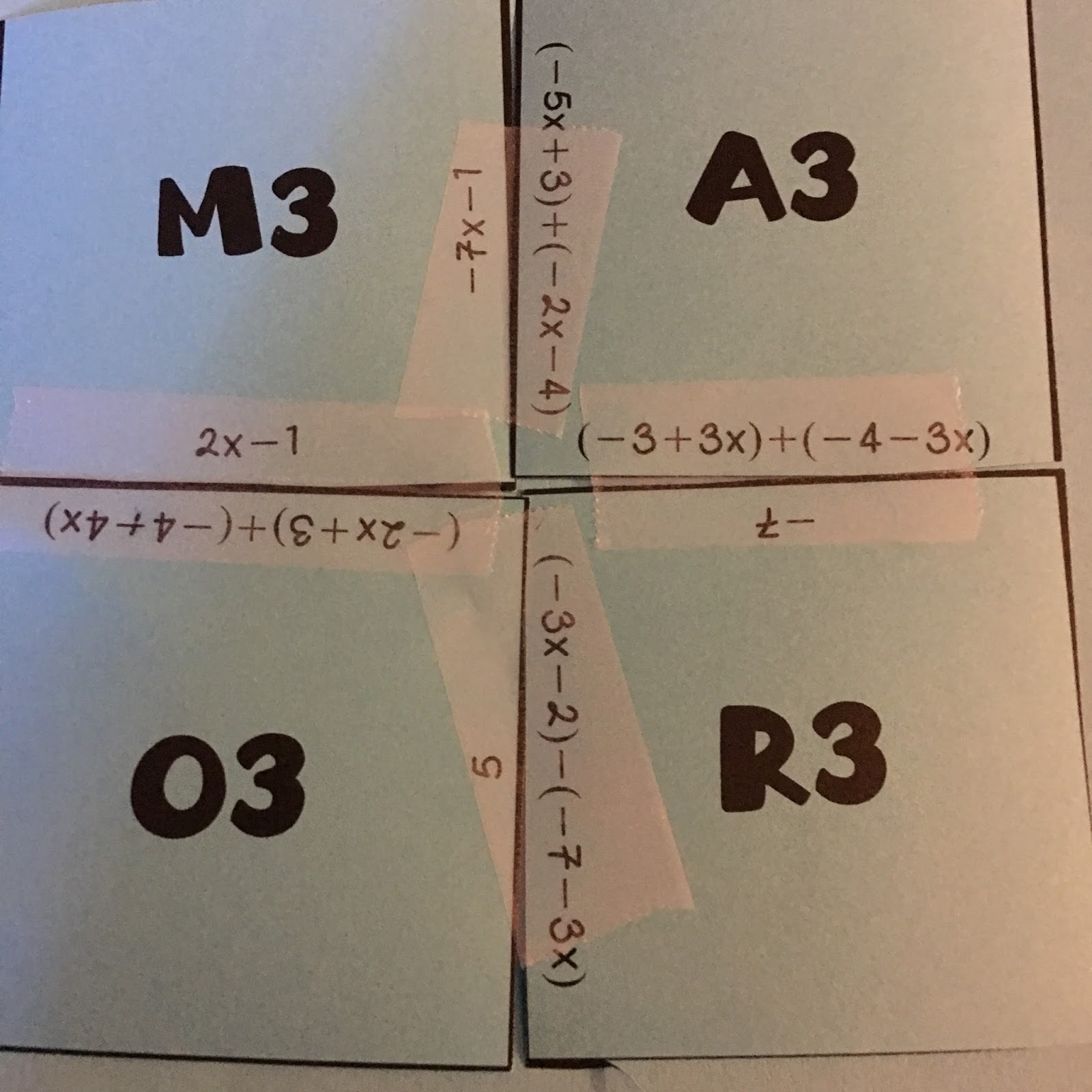
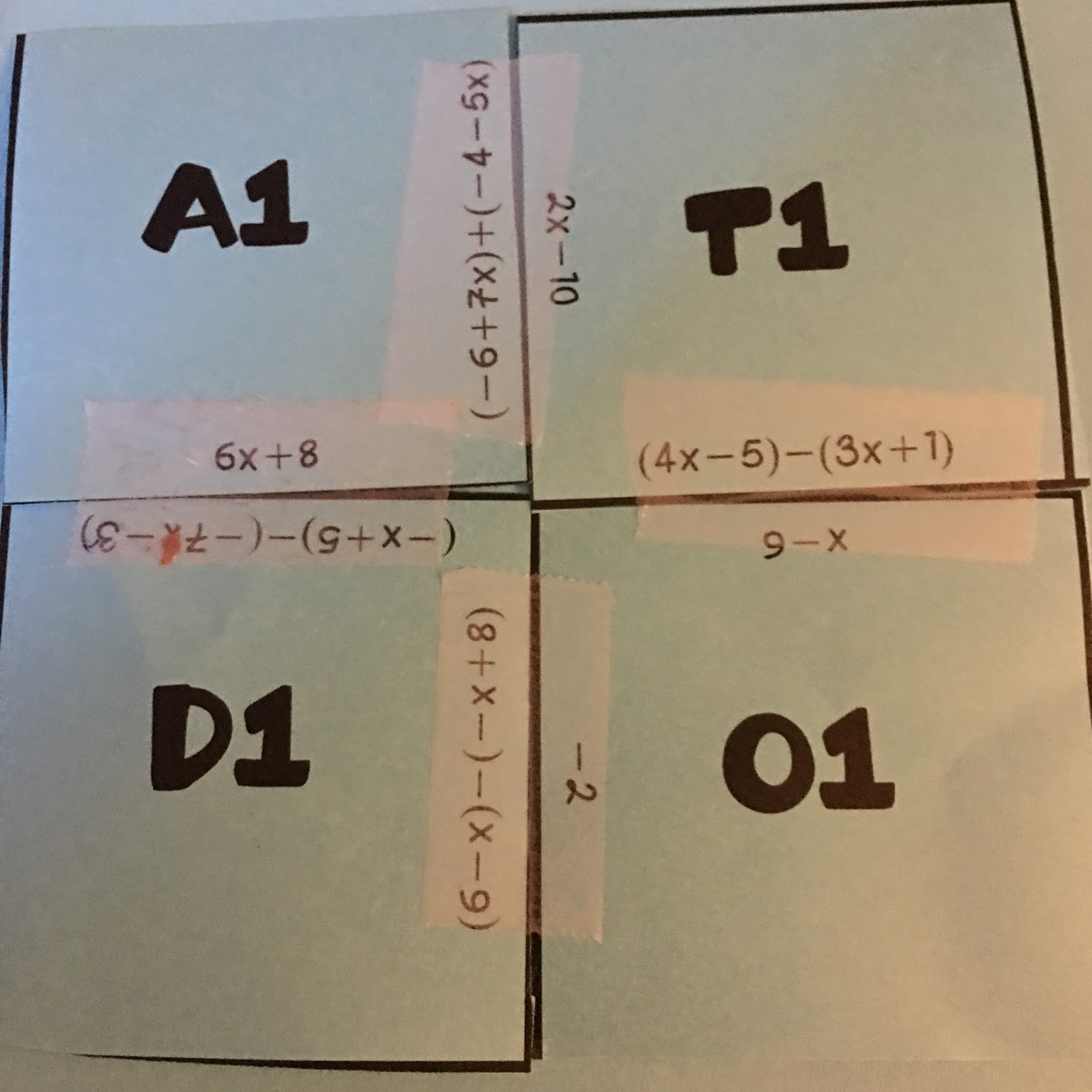 I thought about what I could do to introduce the idea of putting puzzles together perhaps as a warm-up and not as a full activity for the class. This led to the idea of using what I’m calling training puzzles or warm up puzzles. I used the template for the 16 piece puzzle but instead of including 24 problems, I only put 16. This created 4 puzzles that are 2 x 2. Each 2 x 2 puzzle only has 4 problems Which makes it a lot faster to complete and simple enough to do as a warm up individually. I would still expect students to write the problem and show their work and put their puzzle together.
I labeled the puzzles 1, 2, 3, 4 so that they could be printed, cut out and sorted according to which puzzle they belonged. And then the pieces could either be paper clipped or put in an envelope to pass out to students as they enter.
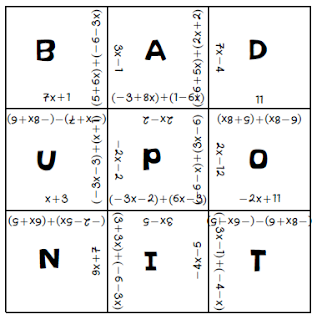
After the 2 x 2 puzzles were done, I decided I might as well create a 3 x 3 puzzle which creates 9 squares and this would be the second step in training the students how to do puzzles. However I would use the 9 square puzzle with partners instead individually. Once students gain some understanding of how the puzzles are put together they could go back to those 16 piece puzzles and give them a little bit of a challenge without being overwhelmed.
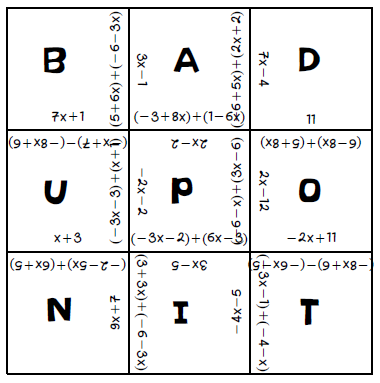
During my discussion with a teacher, she gave me a great classroom accountability tip when using puzzle with groups. She required each student in the group to solve the problems on 4 of the pieces of the 16 piece puzzle and to write their initial on it. She said using my answer key made it really easy to see if the kids got the answers right. She did not tell them their errors but instead had them finish taping/pasting them together, hung them on the walls and had students review and discuss each other’s puzzle. What a great way for students to start talking about errors in a safe way within groups and not in front of the whole class.
If you are interested in using these puzzles or using them as a template for making your own puzzles, they are available here: 2 x 2 Puzzles 3 x 3 Puzzle
If you are interested in using these puzzles or using them as a template for making your own puzzles, they are available here: 2 x 2 Puzzles 3 x 3 Puzzle
Leave a Reply